

 Facebook
 X
X
 Pinterest
 Copy Link
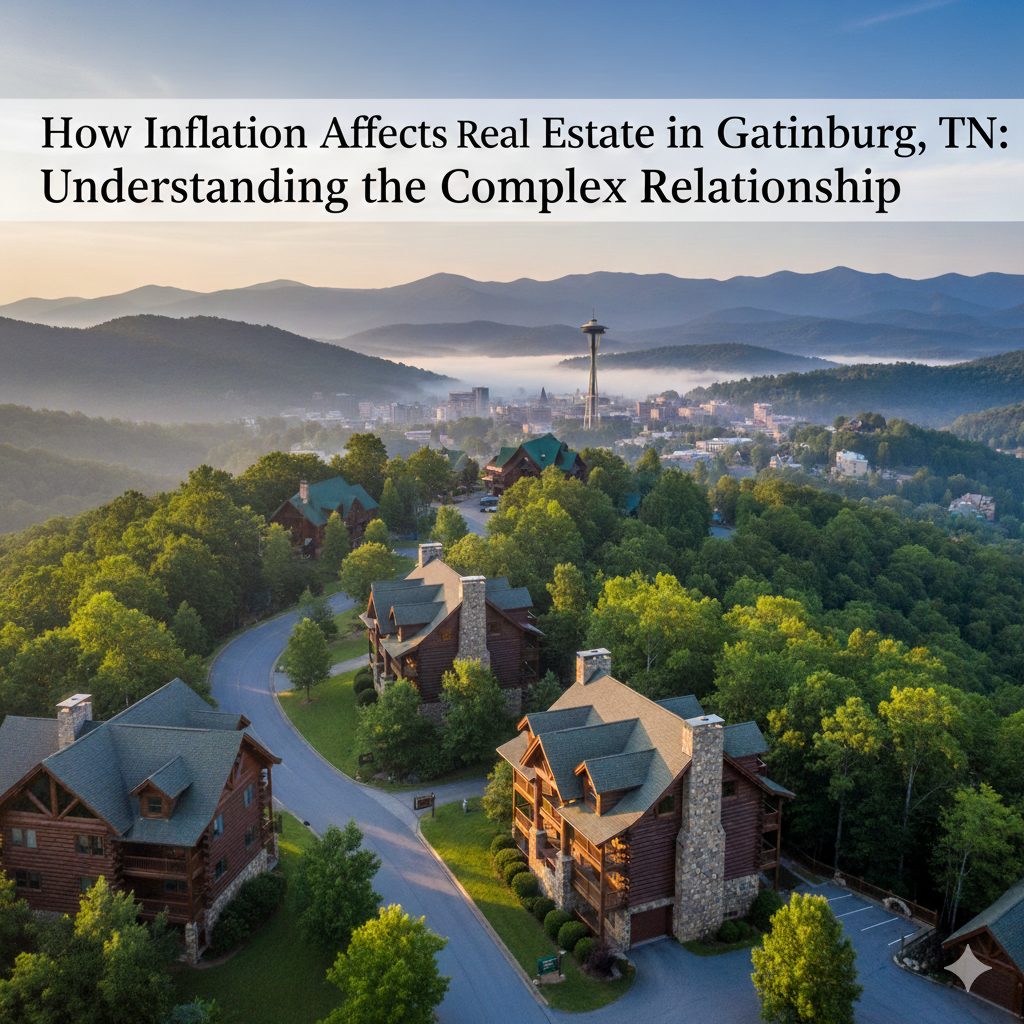
Inflation has become a household word in recent years, affecting everything from grocery bills to mortgage payments. But beyond the immediate impact on our daily expenses, inflation plays a complex and often misunderstood role in the real estate market. Whether you’re a Gatlinburg homeowner, prospective buyer, or vacation rental investor in the Smoky Mountains region, understanding how inflation influences property values, financing costs, and investment returns is crucial for making informed decisions in today’s economic climate.
What Is Inflation and Why Does It Matter?
At its core, inflation represents the rate at which the general level of prices for goods and services rises, causing purchasing power to decline. When inflation is high, each dollar buys fewer goods and services than before. This seemingly simple concept creates ripple effects throughout the economy, and real estate sits at the intersection of many of these impacts.
The relationship between inflation and real estate is multifaceted. While inflation erodes the value of cash savings, it can simultaneously work in favor of property owners and certain types of real estate investors. Understanding these dynamics requires examining several key factors: property values, mortgage rates, rental income, construction costs, and investment strategy.
Property Values in Gatlinburg: The Hedge Against Inflation
Real estate has long been considered a hedge against inflation, and this holds especially true in Gatlinburg’s unique mountain market. As the cost of goods and services rises, so too does the cost of building materials, labor, and land. These increased costs translate directly into higher prices for new construction, which in turn supports higher values for existing properties.
Gatlinburg’s limited geographic footprint, nestled between the Great Smoky Mountains National Park boundaries, makes land particularly scarce. This natural supply constraint amplifies the inflation-hedging characteristics of local real estate. When building costs rise due to inflation, the combination of expensive construction and limited available land creates even stronger upward pressure on property values than in markets with room to expand.
When inflation pushes up replacement costs, existing homes become relatively more attractive. If it costs significantly more to build a new home than to buy an existing one, demand for existing inventory increases, driving up prices. This dynamic creates a natural floor under property values during inflationary periods.
Moreover, real estate is a tangible asset with inherent utility. Unlike paper currency or bonds, property cannot be printed or created at will. This scarcity, combined with the fundamental human need for shelter, gives real estate intrinsic value that tends to rise with general price levels. Historical data shows that over long periods, real estate values have generally kept pace with or exceeded inflation rates, making property ownership an effective way to preserve wealth.
Mortgage Rates and Financing: The Double-Edged Sword
The Federal Reserve typically responds to high inflation by raising interest rates, which has immediate implications for real estate financing. Higher interest rates mean more expensive mortgages, reducing affordability for potential buyers and cooling demand in the housing market.
For prospective homebuyers, this creates a challenging environment. Not only are home prices elevated due to inflationary pressures, but the cost of borrowing to purchase those homes also increases. A difference of just one or two percentage points in mortgage rates can translate to hundreds of dollars in additional monthly payments and tens of thousands of dollars over the life of a loan.
However, existing homeowners with fixed-rate mortgages benefit tremendously from inflation. If you locked in a mortgage at a low interest rate before inflation accelerated, you’re effectively paying back your loan with dollars that are worth less than when you borrowed them. This is one of the most powerful wealth-building aspects of homeownership during inflationary periods. Your mortgage payment remains constant while your income and your home’s value likely increase with inflation.
Rental Income in Gatlinburg: The Vacation Rental Advantage
For real estate investors and vacation rental owners in Gatlinburg, inflation can be particularly advantageous. The city’s position as one of the most visited destinations in Tennessee means rental rates for short-term vacation properties typically rise with inflation. As travel costs, dining, and entertainment prices increase, nightly rental rates can adjust accordingly, creating a natural inflation hedge.
Gatlinburg’s tourism-driven economy adds another dimension to this dynamic. The area welcomes over 12 million visitors annually to the Great Smoky Mountains National Park, creating consistent demand for vacation rentals. During inflationary periods when travelers may cut back on distant destinations due to high airfare costs, drive-to markets like Gatlinburg often see sustained or even increased visitation from regional travelers.
This dynamic is especially powerful for investors who purchased properties with fixed-rate financing. While their mortgage payments remain static, their vacation rental income climbs with inflation and tourism demand. The gap between these fixed costs and rising revenues expands over time, increasing cash flow and returns on investment significantly.
In markets with strong demand and limited supply, rental increases may even outpace general inflation, amplifying returns further. This makes rental properties an attractive investment during inflationary periods, though investors must also contend with rising costs for maintenance, property taxes, and insurance.
Construction Costs and Supply Constraints in the Smoky Mountains
Inflation significantly impacts the supply side of Gatlinburg’s real estate equation. Rising costs for lumber, steel, concrete, and other building materials increase the expense of new construction. Labor costs also typically rise during inflationary periods as workers demand higher wages to maintain their purchasing power.
Building in Gatlinburg presents unique challenges even without inflation. Mountain terrain requires additional site work, specialized foundation systems, and careful engineering. These factors already make construction more expensive than in flat terrain markets. When inflation drives up material and labor costs, the premium for mountain construction becomes even more pronounced.
These increased costs can slow new construction, particularly for moderately priced properties where profit margins are already thin. When building new cabins or condos becomes prohibitively expensive, housing supply tightens, creating additional upward pressure on prices for existing properties.
This supply constraint effect is particularly pronounced in Gatlinburg due to strict zoning regulations, limited available land within city limits, and the physical boundaries created by the National Park. The combination of high demand from tourism investors, naturally limited supply, and elevated construction costs creates conditions for rapid price appreciation, though this also raises questions about affordability for local residents and workforce housing.
Strategic Considerations for Gatlinburg Market Participants
The impact of inflation on real estate varies significantly depending on your position in the Gatlinburg market. For first-time homebuyers or those looking to purchase a primary residence in the area, high inflation combined with elevated interest rates creates significant affordability challenges. Competition from vacation rental investors, who can afford higher prices based on income projections, adds another layer of difficulty for traditional buyers.
However, waiting for conditions to improve carries its own risks in this market. Gatlinburg’s limited land supply means prices may continue rising even during periods of economic uncertainty. Meanwhile, rental costs consume money that could otherwise go toward building equity.
Existing homeowners in Gatlinburg generally benefit from inflation, particularly those with fixed-rate mortgages. Their home equity grows while their housing costs remain relatively stable. For those who operate vacation rentals, the dual benefit of appreciating property values and increasing rental rates can be substantial.
Vacation rental investors must weigh the benefits of rental income growth against increased operating costs and the challenge of acquiring new properties in an expensive market. Many successful Gatlinburg investors focus on properties with unique features—mountain views, proximity to attractions, distinctive amenities—where nightly rate increases are most likely to outpace general inflation. The city’s consistent tourism demand provides a buffer against economic downturns that might affect other markets more severely.
Conclusion: Navigating Inflationary Real Estate Markets in Gatlinburg
The relationship between inflation and real estate is complex, creating both opportunities and challenges depending on your circumstances in the Gatlinburg market. While inflation erodes the purchasing power of cash, it can enhance the value of real estate assets and create favorable conditions for property owners with fixed-rate financing—particularly in a supply-constrained tourism market like Gatlinburg.
Understanding these dynamics is essential for making sound real estate decisions in the Smoky Mountains. Whether you’re buying your first cabin, managing vacation rental properties, or simply trying to understand your financial position as a Gatlinburg homeowner, recognizing how inflation affects different aspects of the local real estate market can help you develop strategies that protect and grow your wealth over time.
In an era of economic uncertainty, Gatlinburg real estate’s role as a tangible asset with both utility value, tourism income potential, and inflation-hedging characteristics makes it a cornerstone of many wealth-building strategies. The area’s unique combination of natural beauty, limited supply, and consistent visitor demand creates a market that has historically weathered economic storms well. By staying informed about inflation trends and their real estate implications in this distinctive mountain market, you can position yourself to navigate these conditions successfully, regardless of what economic headwinds may come.


